Frequently Asked Questions (F.A.Q.)
Tutors: please see our Tutor FAQ.
Our Competition
What makes McElroy Tutoring different from other tutoring companies?Policies
Do you offer a money-back guarantee?How does the process of choosing a tutor work?
How are tutors hired?
Am I allowed to choose my own tutor(s)?
Why do tutor rates vary so widely?
How does billing work?
Why such a strict cancellation policy?
Are there Package Discounts available?
Do you offer a score and/or grade improvement guarantee?
Are materials provided?
Where does tutoring normally take place?
Do you offer group courses or group discounts?
Curriculum
What subjects are available?How long are your private lessons and classes?
Can students expect to be assigned homework?
ISEE and SSAT
How much does the ISEE cost?Are walk-in ISEE tests available?
Can I make changes to my ISEE registration?
Where is the ISEE offered?
How long is the ISEE?
How often may my student take the ISEE?
Do parents receive a copy of the ISEE score report?
How long does it take to receive the ISEE score report?
What books and materials should my student use to study for the ISEE?
PSAT and PLAN
My student has taken the PLAN (the pre-ACT) but his/her scores seem much lower than his/her PSAT scores. Is this true?I have heard that high school juniors can earn National Merit Scholarships if they score highly enough on the PSAT. Should I prepare my high school junior for the PSAT instead of the SAT?
SAT and ACT
For how many lessons should my student and tutor meet?What are the differences between the SAT and the ACT?
What is a "good" score for the SAT or ACT?
What is the conversion from ACT to SAT, and vice versa?
What are the SAT Subject Tests? How many should my student take? When should they be taken?
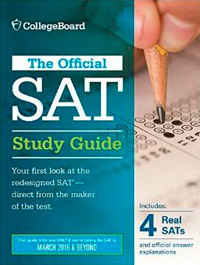
What books and materials should my student use to study for the SAT?
What books and materials should my student use to study for the ACT?
How much does the SAT cost?
What do my SAT scores tell college admissions staff members about me?
College Consulting
My student's high school guidance department already provides college guidance services. Why would I need to hire a private consultant as well?Parent FAQ
My child loathes the idea of having a tutor. How can I convice my son/daughter to see this as a positive step in his/her education?College Student FAQ
I am enrolled in intro-level and/or advanced level college courses. Are there tutors who are available to work with me?GMAT
What is the GMAT?How much does it cost to take the GMAT exam?
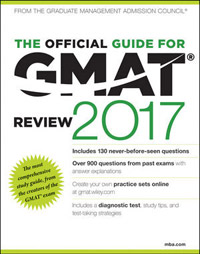
What materials do you recommend for GMAT preparation?
Where can I take the GMAT exam?
What schools use GMAT scores?
How can I prepare to take the GMAT exam?
What does the GMAT exam measure?
How long are GMAT scores valid?
How do I schedule a GMAT appointment?
GRE
How important are my GRE scores?How does the computer-based General Test work?
Can I cancel my GRE scores after the test?
How can I prepare for the General Test?
When should I take the GRE?
What fees are associated with the GRE test?
What are the GRE Subject Tests?
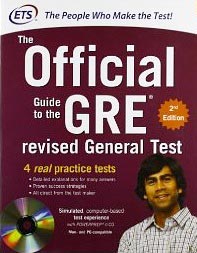
What materials do you recommend for GRE preparation?
How do I register for the GRE computer-based General Test?
MCAT
What is the MCAT?Where will the MCAT exam be offered?
When should I take the MCAT exam?
How far will I have to travel to take the MCAT?
How often will I be able to take the MCAT exam?
How long will I have to wait until I can retake the exam?
Can I get on a wait list for a specific MCAT session?
LSAT
What is the LSAT?When is the best time to take the LSAT?
Where is the LSAT given?
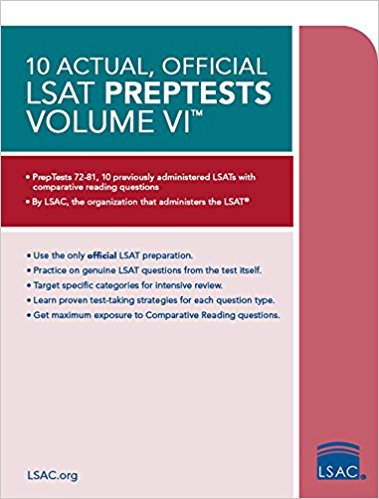
What is the best way to prepare for the LSAT?
How long after the test will I receive my results?
How do law schools evaluate the writing sample?
What materials do I need to bring to the LSAT?
General
How can I monitor student progress?Our Competition
What makes McElroy Tutoring different from other tutoring companies?There are many reasons why McElroy Tutoring stands out from the
Tutoring, Test Prep and College Consulting crowd. Here are some of the main
reasons:
-CLIENT CHOICE. At most tutoring companies, they hide their tutors' identities behind closed doors,
stick you with whatever tutor happens to be available, and allow you
very little choice in the matter. In contrast, we encourage you to
personally select your own tutors,
and provide you with detailed information about all our tutors so
that you can always make a fully informed decision.
-EXPERT TUTORS AT AN AFFORDABLE PRICE.
Our tutors are seasoned educational professionals, many of whom have
designed their own test-prep curricula. Nearly all McElroy Tutoring tutors
have prior experience as tutors or teachers, and many have advanced
degrees from the nation's top
universities.
Unlike some web-based, start-up companies, who boast of having thousands of tutors as a result of hiring nearly every tutor who applies, we set our hiring standards very high. All of our tutors are required to score in the 95th percentile or above on any test they teach, for example, and many have scored in the 99th percentile.
Of course, we do not stop at test scores alone when evaluating our tutors--we also strive
to provide you with naturally gifted teachers and communicators who can
identify with nearly any student. For this reason, all tutor applicants must pass a series of interviews, including a personal interview with our founder Brian McElroy, before becoming an official McElroy tutor.
One would think, with their stellar credentials, that our tutors
would be more expensive than those who work for other companies. But that is definitely not the case. Our tutors' hourly rates are affordable because we keep our expenses low and take advantage of an "economy of scale" by arranging thousands of tutoring sessions each year.
At the big companies, they provide you with underpaid tutors, mass-produced workbooks, and a bunch of automated computer printouts. At McElroy Tutoring, we provide you with the expert services of a professional tutor who can adapt to nearly any educational situation or need.
-PROVEN RESULTS. McElroy Tutoring Inc., with 7 years in Business, currently maintains a rare A+ Rating from the Better Business Bureau. Our tutors are among the best in the nation, and we pride ourselves on our honest and fair customer service.
-PERSONAL ATTENTION. When Brian McElroy founded
McElroy Tutoring in 2002, after his graduation from Harvard and a brief
stint as an instructor at the Princeton Review, he did so because he
saw firsthand how impersonal and ineffective most large tutoring
companies were. He found it ironic that companies claiming to
provide customized, one-on-one tutoring were churning out such a
generic, cookie-cutter product. If you pay good money for private
tutoring, then you should receive quality instruction and individualized lesson
plans, not generic advice and automated computer printouts. Every
student learns differently, and for this reason, every student deserves
customized attention during the tutoring process.
-FLEXIBILITY / BETTER MATERIALS AND TRAINING. Instead
of handcuffing our tutors with "one size fits all" test-prep techniques
and synthetic workbooks, we help them to improve their teaching expertise by providing them with expert-quality materials from a variety of sources. This policy of "information sharing" allows our tutors to become the best educators they can be, while still embracing their own unique teaching styles and methods--after all, the best tutors never need to teach from a script.
Also, unlike many companies, we aren't preoccupied with trying to sell our proprietary materials to students. If a useful textbook happens to be published by another tutoring company, so be it--we give credit where credit is due. By pretending that only your company's workbooks and methods are worth using, you sell your students short. Would you write your senior thesis after consulting only one source?
For a full list of our recommended test-prep books and materials, please click here.
-AN ENVIRONMENTALLY FRIENDLY COMPANY. At McElroy Tutoring, we use only recycled paper and encourage the use of email and PDF files in lieu of paper-based documents. We also seek to lessen our emission of greenhouse gases by conserving electricity, minimizing waste, supporting local farmers, driving Hybrid or high-MPG Vehicles, and using bicycles for transportation whenever possible.
-FREE ONLINE PREP. For those who cannot afford the services of a private tutor, or even current McElroy students who need need extra review of concepts, we provide free test-prep, vocabulary and college advice on the McElroy Tutoring Blog. We also offer free SAT and ACT Prep Videos on the McElroy Tutoring YouTube site. Please feel free to use our website as a resource in your quest to get into college.
To read Brian McElroy's annual letter to students and parents, which outlines in more detail why you should choose McElroy Tutoring, please click here.
Policies
Do you offer a money-back guarantee?Yes. If
you are not happy with your tutor after your first lesson, then we will
be happy to provide you with a full refund and/or find you a new tutor.
(Please note: this guarantee was formally implemented in December of 2008.)
How does the process of choosing a tutor work?
From the moment you contact our office, we will begin working to find you or your student the best tutor available in your area. Sometimes we will even assign you multiple tutors for different subjects (such as the Math and Verbal sections of a test) . You are free to try out multiple tutors for one hour at a time before deciding on any long-term packages.
We strive to pair our
students with tutors who are not only experienced in the subject areas
where the student needs assistance, but also have personality types that
will mesh with that of the student. If you wish, you can also search through our tutor database yourself, and browse tutor profiles by subject, rate and zip code, using our state-of-the art website.
Our office staff is available to answer your phone calls Monday through Friday, 9AM-2PM PST. We also offer all of our clients a complimentary 15-minute phone consultation with our Director/CEO, Brian McElroy. The purpose of this consultation is to formulate a basic idea of how much preparation your child will need for an upcoming test or how many hours they should meet with a subject tutor each week.
If you like, then we can also schedule a 1-hour consultation
with Brian McElroy or one of our other academic consultants. This
consultation will provide an in-depth look at your student's unique
strengths and weaknesses. We will recommend particular tutors to you based on your needs, and a test-prep calendar and tutoring schedule
will also be settled upon at this time. We will help you decide which
standardized tests your student should take, and when your student
should take them. An in-person meeting or extended phone consultation also gives our staff a much better
idea of the student's personality, which is important information to have when selecting a tutor.
We like to think of ourselves as "middlemen that don't get in the middle." We always encourage our tutors to keep our office staff up-to-date, but McElroy students or clients are always welcome to contact their tutors directly to schedule future lessons. However, please do not try to pay your tutor directly--all lessons must be prepaid through our main office (866-584-8886) or website at least 24 hours in advance.
How are tutors hired?
Applicants for tutoring positions with McElroy Tutoring are first required to fill out a detailed online application through our website. If their applications are provisionally approved, then applicants must submit additional paperwork, then schedule, and "pass," one-on-one interviews with our Hiring Manager Erin Lester, and our President, Brian McElroy.
Even after tutors are hired, we continue to evaluate their performances on a regular basis, using our proprietary Tutor Rating System to ensure that our clients are fully satisfied with the academic help that they are receiving.
We receive thousands of applications from educators across the country
every year, so we can afford to be selective; only the finest tutors
will become a part of the McElroy team. We only approve around 20% of tutor applications each year, and all McElroy Tutors are required to have recently scored in the 95th percentile or above on any standardized tests that they teach.
Please click here for more detailed information on our hiring practices and tutor evaluation procedures.
Am I allowed to choose my own tutor(s)?
Certainly! We always encourage clients to examine our online tutor profiles
and get an idea of who they might like to work with before contacting us. Then call our office to arrange a meeting, or contact tutors directly via email using our proprietary messaging system.
If you prefer, then we would be
happy to simply select a tutor for you, or help you decide among several potential tutors.
Why do tutor rates vary so widely?
At McElroy Tutoring, we don't pretend that all tutors are equally
skilled and/or experienced by charging the exact same hourly rate for
each tutor. Some of us are test-prep masters, Ivy-League grads and
Ph.Ds with decades of teaching experience, while other MT Tutors are current college students or
recent college grads with only brief tutoring experience, but tons of
enthusiasm, intelligence, patience and creativity. While these
qualities are certainly a plus, one must admit that there is no
substitute for experience. And with experience comes added cost.
Our Junior Tutors start a very reasonable $25/hr, and we work our way up from there. We like to think that we can offer a tutoring package for almost any budget.
Compare our reasonable pricing policy to those of the big companies, who charge as much as $400/hr for their most experienced tutors and over $100/hr for tutors who are still in college!
As tutors gain more experience and are requested more frequently, we begin to "promote" them by gradually raising their hourly rates. Some of our most successful tutors have worked with hundreds of students, and charge up to $100/hr or more. If you can afford it, then these tutors are worth every cent. Click here for more detailed information on our Tutor Ratings & Classifications.
How does billing work?
Your initial 1-hour lesson with any McElroy Tutor must be paid for by
credit card, Paypal or Google Checkout. We also offer a 25% discount off your first hour of tutoring if you pay by phone.
Although you never have to pay for more than one lesson at a time, all lessons must be pre-paid through our office 24 hours in
advance. We accept payment by credit card, Paypal, Google Checkout,
and personal check. However, if you prefer to pay by check, then you must purchase a minimum of 10 hours up-front.
We
also offer significant discounts for pre-paid packages. For every 5
hours that you pay for in advance, you will receive 5% off the total
cost of tutoring, all the way up to 25 hours at a 25% discount.
Why such a strict cancellation policy?
McElroy Tutoring requires 24 hours notice for a cancellation. There are no exceptions to this rule.
Tutors can have anywhere from 1 to 10 students, perhaps more. Often they have full-time jobs as well. When tutoring is scheduled they are committed to their student at that time and expect the same commitment in return. Please understand that tutors can often fill your time slot with another student, if given enough advance notice.
Are there Package Discounts available?
Yes. McElroy Tutoring offers an up to 25% discount for prepaid packages.
Do you offer a score and/or grade improvement guarantee?
No, we do not. At McElroy Tutoring, there are no misleading improvement guarantees, no
complicated contracts to sign, and no fine print.
Unlike many of the big,
faceless tutoring and test-prep corporations, we don't see the need to
make false or misleading score improvement guarantees,
or require you to pay for the entire amount up-front, in order to secure your business. This is because
we trust in our tutors' results, our affordable rates, and our wide selection of professional educators, and know that you will likely choose to keep working with us.
We are happy to offer our clients a money-back guarantee for their first lesson, as many other companies do. However, we choose not to make long-term score or grade improvement guarantees because we respect the
intelligence of our clients and know, as you do, that while we can easily return your money, no service can
ever truly guarantee its students' success. And sure, we could also offer you a free "refresher" session if your test scores don't improve after a few months, as some companies do, but why would you continue to work with a company or tutor who wasn't able to get any results the first time around? And is an improvement guarantee really worth the consequence of getting a bad score and/or wasting your valuable preparation time?
Although our score & grade improvements and college acceptance rates are among the very best in the business, we wholly reject the notion of improvement guarantees because we believe that these policies are little more than marketing gimmicks offered by mediocre companies with inexperienced tutors.
Most of these big tutoring companies never truly intend to honor these guarantees, and they are full of fine print and exceptions anyway, just the like the health insurance policies, cell phone protection plans, and other types of contracts written by corporate lawyers who are just trying to fool you out of your money.
At McElroy, we pride ourselves on our honest service, and thus do not want to ever associate ourselves with this type of snake-oil salesmanship.
The simple fact is that, although our tutors are the best in the business,
McElroy Tutoring students still need to study and work hard in order to succeed.
We can't do our students' homework for them, or force them to pay close
attention during lessons. But we can promise you this: at McElroy Tutoring, we have
some of the most talented and brilliant tutors in the business. Our
tutors are educator perfectionists and voracious learners who are not
happy until they have helped their students learn as much as humanly
possible. So a McElroy student's chances of success are very, very good
if the student has the proper motivation and discipline.
It is also not our goal to attract clients based on dubious grade or score improvement calculations. While company-produced student evaluation charts may sometimes be reassuring, they often do not reflect your student's actual performance. Instead of pushing for short-term gains, we try to formulate an overall view of each student's potential, set realistic goals, and then create a long-term plan for attaining these goals that meets your budget.
Please keep in mind that academic progress often takes time and
that all students improve at different rates. Providing tutors and
students with ample time to work, thus alleviating the pressure of
last-minute cramming sessions, is always a great way to ensure success.
A Personal Note from our Founder and President, Brian McElroy:
Let's be honest: guarantees and promises mean almost nothing in business these days. Just ask anyone who holds stock in General Motors, or those who work in the credit and mortgage industries.
I had to laugh recently when I came across the website of a
well-known SAT tutoring company, whose stock price has taken a big drop
recently due the tough economy and persistent rumors of under-qualified tutors and overpriced
classes.
There were no new updates to the site in the past 12 months, except to claim increasingly higher average score improvements every couple of months or so. I wonder if these tutors know how to calculate an average correctly!
Anyway, the more the stock price
tumbles, the higher the SAT score improvement claims they seem to be
making. Sounds like the "Boy Who Cried Wolf" to me.
These frequent instances of dishonest, infomercial-type marketing remind me of the story of the golfer who claims to have
shot 16 holes-in-one in a 6-month period. If you believe these types of stories, or the empty score improvement guarantees of the big tutoring companies, then I've got a bridge in Brooklyn that I'd like to sell you.
At the end of the day, as a person deciding between different tutors and/or tutoring companies (trust me--I know it's hard to effectively compare tutoring companies at first glance, and that there are many of them floating around the Internet these days), you simply have to go with the company you trust the most to improve your scores or grades. We're hoping that you choose McElroy Tutoring because we have the very best tutors in the business, and a well-earned reputation as a leader in our field, not because we make flimsy promises of success.
Are materials provided?
Yes--we are happy to ship materials directly to your home at your request. All materials are billed for at their current Amazon.com retail
price. If you purchase a pre-paid package of 15 hours or more, these materials (up to a $30 value) will be provided for free.
Where does tutoring normally take place?
Nearly all of tutors are willing to travel to your home or to the public location of your choice. No one can deny the convenience of home tutoring, but sometimes tutors and students are better served by meeting in a library, or a public location such
as a coffeehouse. Coffeehouse tutoring can eliminate some of the "predictable
distractions" (friends, parents, siblings, telephone calls, pets) that
can arise in an in-home tutoring environment, while the "unpredictable distractions" (music, soft conversation) at a coffeehouse can actually help the student learn to "tune out" outside thoughts and focus solely on the test.
Do you offer group courses or group discounts?
Yes. We offer group courses of up to 8 students at a time. To see our discounted group rates, please visit our group courses page.
Curriculum
What subjects are available?How long are your private lessons and classes?
Our standard lesson length for private tutoring
is 1.5 hours. However, we recommend shorter meetings (approximately 1
hour each) for younger students in grades K-8, and/or your initial
lesson with a new tutor. Our tutors are also available for lessons of
2 hours or more, although in most cases we do not recommend this.
For our test-prep and group courses, we recommend 1.5-hour classes for groups of 2 students, 2-hour classes for groups of 3-5 students, and 2.5-hour classes for groups of 6-8 students.
Can students expect to be assigned homework?
Yes and no. Only our test-prep students will be assigned homework (approximately one hour of homework per session). Subject tutoring students will simply complete the homework assigned by their teacher, and review/complete it with the aid of their tutor.
ISEE and SSAT
How much does the ISEE cost?Are walk-in ISEE tests available?
Yes, a limited number of test sites and dates are available for walk-in registration. Of course, ISEE walk-in registration is on a first-come, first-served basis and cannot be assured due to limited test materials and staff. You will pay an additional $30 fee for walk-in registration. Be sure to call the test site directly to see if you can be accommodated. If so, please bring the following materials to the ISEE test site:
A completed Registration Form
The test fee plus the additional $30 (check, Visa, MasterCard or American Express)
Be aware that ISEE test site supervisors do not accept cash and scoring will be delayed if your Registration Form has not been properly completed. Allow two extra business days for score reports and telephone reports.
Can I make changes to my ISEE registration?
Yes, contact the Operations Office at 1-800-446-0320 immediately to make any changes to your submitted form. Some changes, such as rescheduling a test date, may result in additional fees.
Where is the ISEE offered?
The ISEE test is offered in over thirty metropolitan areas across the country. The list of testing dates and locations is found in the ISEE Student Guide available through the school to which your student is applying or online.
How long is the ISEE?
The test is approximately three hours in length, not including time for reading directions and the two scheduled breaks.
How often may my student take the ISEE?
You may test only once within a six-month period, and the exam may not be taken for practice.
Do parents receive a copy of the ISEE score report?
Yes, parents will automatically receive a copy of their child’s score report. An optional telephone reporting service is available to you for an additional $30 fee per recipient.
How long does it take to receive the ISEE score report?
Schools and
parents will receive a copy of their student's ISEE score report approximately 7-10
business days after the test date.
What books and materials should my student use to study for the ISEE?
ISEE Prep: Recommended Books and Materials
1) What to Expect on the ISEE, by the Educational Records Bureau.
This is the only ISEE manual that is offered by the maker of the test.
It includes practice questions, answer explanations and half-length
practice tests for students taking the Middle and Upper-Level ISEE
(grades 7 through 12). Much like the Real ACT Prep Guide, this book is a helpful resource, but it does not contain enough practice material for a full preparation. For test dates, preparation tips and ISEE registration information, you can visit the ERB website at www.erbtest.org.
(Please Click Here to View/Buy the rest of our ISEE Book Recommendations on Amazon.com)
PSAT and PLAN
My student has taken the PLAN (the pre-ACT) but his/her scores seem much lower than his/her PSAT scores. Is this true?It's possible. But be careful; most students find the PLAN to be a little bit easier than the PSAT. Note that the PLAN is out of 32 points instead of 36, so the use of a score conversion table often misleads you into thinking that his/her PSAT score was better. Try this equation: (predicted ACT score = PLAN SCORE x 1.125)
I have heard that high school juniors can earn National Merit Scholarships if they score highly enough on the PSAT. Should I prepare my high school junior for the PSAT instead of the SAT?
Yes, this is true--high school juniors who score in the 97th percentile or above on the PSAT are eligible for National Merit Scholarships, which are very prestigious awards. Many colleges offer full scholarships to National Merit Semifinalists and Finalists.
Thus, if your student has the potential to score in the top 3rd percentile on the PSAT, it makes sense to prepare for the junior year PSAT just as seriously as you would prepare for the SAT. The other advantage is that when it comes time to prepare for the SAT, your student will already have a significant head start on the rest of his/her class.
Sophomores are NOT eligible for National Merit Scholarships. So feel free to go ahead and take it "cold" to see you you do.
SAT and ACT
For how many lessons should my student and tutor meet?
Our specialty at McElroy Tutoring is to work one-on-one with each student. This means that each case is different, and while we can offer our best predictions based on student grades/test scores, there are no guarantees. Usually we give you rough idea of how many lessons should be scheduled and then have the tutor and student (and parents) decide as the tutoring proceeds.
Obviously, the more hours a student can dedicate to studying and homework in-between each lesson, the more productive each tutoring session will become. If the lessons are productive, then you will likely need to pay for fewer lessons (and vice versa).
Our general lesson recommendations for SAT or ACT prep are listed below. However, a few lessons is certainly better than none, so please don't treat these recommendations as a minimum. The recommended hours are for a full preparation of the test, where every aspect of the test is covered in detail. Even just one lesson with one of our expert tutors can make a positive difference in your score.
AVERAGE TIME ESTIMATES FOR A FULL TEST PREPARATION WITH ONE OF OUR TUTORS (total number of necessary hours varies from student to student):
SAT (all sections) - 15-25 hours
SAT (one section) - 5-10 hours
ACT (all sections) - 15-25 hours
ACT (one section) - 5-10 hours
SAT and ACT (all sections) -- 20-30 hours
SAT Subject Tests -- 5 hours each
What are the differences between the SAT and the ACT?
We could probably write a book on this question alone---after all, Test Prep is our specialty! But for the sake of brevity, we'll give you the most essential stats:
SAT:
-3 main sections: Critical Reading, Math, Writing. 3 sub-sections per main section for 9 sections total, plus one experimental section.
-Total Test time: 3 hours, 45 minutes
-Highest Possible Score: 2400
-Students often find the SAT to be more difficult than the ACT.
-There is a penalty for wrong answers.
-It's more of a reasoning test than a test of raw knowledge.
-Verbal skills make up 2/3 of the test.
-The College Board can send all of your scores to colleges (not just your best scores, as some people think). You should take it as few times as necessary to get a good score. (PLEASE NOTE: THIS POLICY HAS BEEN ALTERED FOR MANY STUDENTS IN THE CLASS OF 2010 AND BEYOND. FOR MORE INFORMATION CLICK HERE.)
-It's the preferred test of most Ivy-League colleges.
-25 minute essay on a philosophical topic.
-Students on the east and west coasts tend to prefer the SAT over the ACT.
ACT:
-5 sections: English, Math, Reading, Science, Writing. No sub-sections.
-Total Test time: 3 hours, 25 minutes.
-Highest possible score: 36
-The ACT is a little bit easier than the SAT.
-There is no penalty for wrong answers.
-It's more of a curriculum-based test. In other words, if you do well in school, you will probably also do well on this test. There are more straightforward questions and fewer questions involving deliberate subterfuge than there are on the SAT.
-More memorization is required for the ACT than the SAT.
-Verbal Skills make up 3/5 of the test.
-ACT, Inc. sends only your best score (from one test date) to colleges. It's always to your advantage to take the ACT as many times as possible.
-30 minute, straightforward essay topic that is relevant to teenagers' everyday life.
-Students from non-coastal states tend to prefer the ACT over the SAT.
Although some high school students choose to take one test only, most students will benefit from taking both tests, then choosing the test with the better score. To compare scores from the ACT to scores from the SAT, and vice versa, please see this table.
What is a "good" score for the SAT or ACT?
An average score (50th percentile) on the SAT is around 1500. An average score on the ACT is around a 21. However, with hard work, most students can improve their SATs by around 250 points and their ACT scores by up to 7 points (our average SAT score improvement is 254 points).
What is the conversion from ACT to SAT, and vice versa?
For one example of a score conversion table, please see this chart.
Score conversion tables vary, but not by too much. Click here for one from the UC system (scroll down for the conversion to a "UC score.").
Please keep in mind that these "score concordance tables," as they are called, are simply comparisons of student percentiles from each test. These are not exact comparisons, because not every student takes both the SAT and the ACT.
What are the SAT Subject Tests? How many should my student take? When should they be taken?
The SAT Subject Tests are one-hour tests on academic subjects such
as Math, Sciences, History and Languages. Whether or not your student
needs to take them depends on the colleges to which the student is
applying. Many college do not require SAT Subject tests. Then
again, many other schools do require them, especially the nation's top
schools. Most schools who ask for SAT Subject Tests require that you take two tests, though some (such as Harvard) require three.
However, there is a catch. The SAT Subject tests are quite difficult (i.e, students often score in a lower percentile then they and their parents would expect, because those who take these tests are a self-selected group). In other words, only tough schools require Subject Tests, and only elite caliber students decide to take them. If you think you might want to apply to a school that requires the SAT Subject Tests, it would be wise to take them at the end of your junior year, when you are taking finals and the material is fresh in your mind.
However, before taking any actual tests, we would advise you to buy the following two books:
1) The Official Guide to the SAT Subject Tests, by the College Board, and 2) Top 366 Colleges, by the Princeton Review. One will help your student prepare for the tests, the other will help you figure out which schools require Subject Tests as part of their applications. Most elite colleges require 2, or sometimes 3, of these tests.
If you have already taken the test, received your score (800 points maximum) and want to know just how you compare to other students taking that particular test, you should consult this percentile table for all SAT Subject Tests. Or, if you're still practicing, you can get a good estimate of where you will score without having the score included on your permanent test record (remember, every SAT counts and is sent to colleges if you send any SAT score). Don't worry if your percentile is below what you would expect---many McElroy Tutoring students have improved their Subject Test scores by up to 200 points!
You will also noctice that your percentiles will vary widely. For example, notice that a perfect 800 on the Chinese Subject Test is only 61st percentile! And a 700 on the Math 2 test, what seems like a great score, is actually only 56th percentile. This is because the only students who choose to take the SAT Subject Test in Chinese are people who are really good at Chinese, such as native speakers. And Math IIC is the harder of the two Math Subject Tests. So a score in the 50th perecentile is really more like 75th percentile, since this represents the 50th percentile of the top half of students taking a Math Subject Test.
Go ahead and take the practice tests from the Official Guide in a few different subjects, and see where you stand. We recommend that you prepare for the tests where your initial scores are the highest, plus any additional tests that your colleges may require.
What books and materials should my student use to study for the SAT?
To View our list of Recommended SAT Prep Books on Amazon.com, please click here.
Additional SAT Prep Books and Materials not available on Amazon.com:
2) SAT Unlocked, by Adam Piacente. This is one of the only SAT Preparation Guides available that uses real questions from the Official SAT Study Guide as its examples. It also takes the book a step further by classifying the problems by type. Its author, Adam Piacente, is a lawyer and expert SAT instructor with many years of experience as a private SAT Tutor in Marin County, CA.
Unlike the big test-prep companies, who write their questions to fit their techniques, Adam writes his techniques to fit real SAT questions. That's a very important distinction.
The only drawbacks to this book are that 1) it's currently only available as a PDF and 2) it costs $50. If you have a good tutor, it's probably not necessary to buy this book. However, we highly recommend this book to tutors as a preparation guide.
SAT Prep Websites and Free Videos
www.mcelroytutoring.com/blog.php
2) The McElroy Tutoring Free Test-Prep Videos You Tube Site:
www.youtube.com/mcelroytutoring1
3) Free SAT Prep Videos - Explanations to all SAT Math problems from the Official Guide to the SAT by Salman Khan of Khan Academy:
www.khanacademy.org
What books and materials should my student use to study for the ACT?
To View our list of Recommended ACT Prep Books on Amazon.com, please click here.
How much does the SAT cost?
See test fees for all associated costs for taking the SAT. Students who meet fee-waiver-eligibility guidelines and cannot afford test fees should see their counselor to request fee waivers. Fee waivers are not permitted with late registrations (except for the October test). Learn more.
If you are a high school junior or senior who is eligible to receive an SAT fee waiver, you can order up to four additional flexible score reports at no charge, while you are in high school. You can use these four additional flexible score reports with your registration to order additional score reports beyond those included with the registration. You can also use them to send scores after scores are reported. You are entitled to use just four flexible score reports, regardless of the number of times you have registered.
Students who have previously used a fee waiver to register for the SAT or SAT Subject Tests automatically receive flexible score reports at no charge. Students who meet our fee-waiver eligibility guidelines, but have not yet used a fee waiver to register, can still use the flexible score reports. They should obtain a fee-waiver card from their counselors and use the fee-waiver code (listed on the card) to order additional reports at no cost. Learn more.
(source: collegeboard.com)
What do my SAT scores tell college admissions staff members about me?
Your SAT scores can tell admissions staff members how well prepared you are for college-level academics. The scores also allow colleges to compare your college readiness with other students in a standardized way. That's because all scores are reported on the 200-800 scale. For example, if your scores are roughly 500 on each section, which is the mean (average) score, college admissions staff knows you scored about as well as half of the students who took the test.
The SAT is the best independent, standardized measure of a student's college readiness. It is standardized across all students, schools, and states—providing a common and objective scale for comparison. High school grades are a very useful indicator of how students perform in college, yet there is great variation in grading standards and course rigor within and across high schools.
Remember, too, that the SAT is only one of a number of factors that colleges consider when making admissions decisions. Other factors, like your high school record, essays, recommendations, interviews, and extracurricular activities, also play a role in admissions decisions.
(source: collegeboard.com)
College Consulting
My student's high school guidance department already provides college guidance services. Why would I need to hire a private consultant as well?
That's a complicated question, and the answer depends on your situation. First of all, we would like to take this opportunity to make one thing clear: our college consulting services are NOT intended to replace the services of your high school's guidance counselor. (These counselors are a vital part of the college admission process and should be treated as such.) Instead, we work behind-the-scenes to give your student the type of individual attention that most guidance counselors only wish they had the time to provide.
At McElroy Tutoring, we do not consider college consulting to be an entirely separate service. Instead, we offer a hybrid of tutoring and consulting services. The better our tutors get to know your student, the more specific advice we can provide.
We will be the first ones to admit that there are some excellent guidance counselors working in our local schools, and that these counselors are often serve as important (and free) resources for both students and parents. However, when it comes to something as important as your child's education, it never hurts to seek an informed second opinion. And just because your student goes to a expensive private high school such as Francis Parker or Bishops doesn't necessarily mean that your guidance counselor is qualified or competent--we can certainly speak from experience on that matter. Ultimately, students and parents will always be free to decide whom to trust on such essential matters as college applications and SAT/ACT preparation.
In many cases, especially at public high schools, guidance counselors are simply overbooked and underpaid by their schools, and despite their best intentions, these counselors simply cannot find the time to give you the type of customized advice that a private consultant can provide. This is why we only accept a maximum of 30 full-time college consulting clients, per consultant and per year.
Many public and private high school guidance counselors are more than happy to work alongside our college consultants. However, it is important to keep in mind that certain guidance counselors resent the involvement of private consultants, seeing it as an intrusion into their territory. So if you do choose to retain the services of one of our college admissions consultants, then we would advise you not to mention this fact to your high school's guidance counselor. That way, you can be sure that your counselor won't treat you any differently as a result.
Parent FAQ
My child loathes the idea of having a tutor. How can I convice my son/daughter to see this as a positive step in his/her education?
One of the first things that you should tell your son/daughter is that a private tutor is not just another teacher. Tutors don't give grades, they don't report you to the principal for bad behavior, and they don't assign endless hours of homework. Rather, the relationship between tutor and student is one of cooperation and teamwork. Tutors help students do better in their classes, ace standardized tests, study more efficiently, complete long-term assignments and projects on time, and learn how to get their homework done more quickly every evening. Our tutors aren't drill sergeants, either--they have very affable personalities that complement their teaching talents, and they understand the importance of giving their students a break now and then, and allowing students to learn at their own pace. All McElroy Tutoring tutors strive to be mentors as well as teachers, and to share with their students the benefits of their life experiences.
Many of our clients remark that it now takes their children much less time to complete their homework every night, thus allowing them the free time to pursue other interests outside of school. A tutor imposes study discipline and discourages procrastination, in the same way that a personal trainer imposes exercise discipline by discouraging laziness!
After a while, students get used to the tutoring routine, and as tutor and student get to know each other better, they become more comfortable working together. Eventually, even the most reluctant students will actually start to look forward to their tutoring sessions, because they know how much easier school becomes, and how much fun learning can be, when the tutor is around. No more late nights worrying about quizzes, tests or incomplete assignments: our tutors will keep a close watch throughout the school year to make sure their students never fall too far behind in class. In fact, sometimes our tutors are so skilled at what they do that they end up working themselves out of a job! Eventually, the student grows older, becomes a more successful and independent student, and no longer needs the tutor's assistance.
College Student FAQ
I am enrolled in intro-level and/or advanced level college courses. Are there tutors who are available to work with me?
Yes! Many of our tutors are well-qualified to prepare students for college courses or various graduate exams such as the GRE and GMAT, LSAT and MCAT. Please feel free to call our office to discuss different options, or to search for tutors in your area through our website.
GMAT
What is the GMAT?The GMAT exam is a standardized assessment, delivered in English, that helps business schools assess the qualifications of applicants for advanced study in business and management.
By taking the GMAT exam, you have a better chance of being targeted by business schools that are a good match for you—and learning more about their programs and admissions processes. You can help them find you by creating an mba.com profile and opting in to being contacted by schools.
Schools use the test as one predictor of academic performance in an MBA program or in other graduate management programs.
(source: http://www.mba.com/mba/thegmat)
How much does it cost to take the GMAT exam?
The cost to take the GMAT exam is US $250 globally.
(source: mba.com)
What materials do you recommend for GMAT preparation?
Please visit our Amazon.com "listmania" page to view/buy our recommended GMAT books: http://www.amazon.com/GMAT-Prep/lm/R21ENQB1ETC9Y7/ref=cm_lm_byauthor_title_full
Where can I take the GMAT exam?
The GMAT exam is delivered in testing centers around the world. Find a test center here.
(source: mba.com)
What schools use GMAT scores?
Over 1900 graduate business schools around the world use GMAT scores as a part their admissions process. Find GMAT using schools here.
(source: mba.com)
How can I prepare to take the GMAT exam?
The Graduate Management Admission Council® provides free test preparation software and preparation materials to purchase as well as suggestions about how to prepare for the exam.
(source: mba.com)
What does the GMAT exam measure?
The GMAT exam measures basic verbal, mathematical, and analytical writing skills that you have developed in your education and work. It does NOT measure:
* your knowledge of business,
* your job skills,
* specific content in your undergraduate or first university course work,
* your abilities in any other specific subject area, or
* subjective qualities—such as motivation, creativity, and interpersonal skills.
How long are GMAT scores valid?
Your GMAT score is valid for five years, so you have the flexibility of “banking it”—choosing to start your graduate studies right after university or later on. Remember, if at first you don’t succeed, you can take the GMAT exam again. Remember, though, that all of your GMAT scores from the past 5 years will appear on your Official Score Report.
(source: mba.com)
How do I schedule a GMAT appointment?
Schedule a GMAT appointment now.
(source: mba.com)
GRE
How important are my GRE scores?Be sure to contact the specific schools to which you are applying in order to determine each schools specific requirements. Schools vary tremendously in the weights they place on the different factors in the admissions process. Some schools expect a minimum score for consideration, while other programs use your GRE score as a formality. Keep in mind; your GRE score is a major factor in determining your eligibility for financial aid.
(source: www.ets.org)
How does the computer-based General Test work?
The Verbal and Quantitative Reasoning sections of the General Test are adaptive tests. They are tailored to your performance level and provide precise information about your abilities using fewer test questions than traditional paper-based tests.
At the start of the test, you are presented with test questions of middle difficulty. As you answer each question, the computer scores it and uses that information, as well as your responses to preceding questions and information about the test design, to determine the next question. As long as you answer correctly, you will typically be given questions of increased difficulty. When you respond incorrectly, you will typically be given less difficult questions.
Because the computer scores each question before selecting the next one, you must answer each question when it is presented. For this reason, once you answer a question and move on to another, you cannot go back and change your answer. The computer has already incorporated both your answer and the requirements of the test design into its selection of your next question.
On the Analytical Writing section, the two writing tasks are delivered on the computer, and you must type your essay responses.
For the Issue task you will be able to choose one of two essay topics selected by the computer from the pool of topics.
The Argument task does not offer a choice of topics; the computer will present you with a single topic selected from the topic pool.
The testing software uses an elementary word processor developed by ETS so that individuals familiar with a specific commercial word processing software do not have an advantage or disadvantage. The software contains the following functionalities: inserting text, deleting text, cut and paste, undoing the previous action and scrolling.
Can I cancel my GRE scores after the test?
Yes. You can cancel your scores immediately after you finish taking the GRE test. This is the only time you can cancel your GRE scores. Be aware that you must decide to cancel your GRE scores before you see your scores. Your decision to cancel your GRE scores will be noted in your official GRE score report.
(source: www.ets.org)
How can I prepare for the General Test?
Registrants in the United States, Puerto Rico and Canada are advised to download the free GRE Powerprep® software to prepare for the computer-based GRE General Test. Individuals who do not have Internet access and would like a copy of Powerprep mailed to them should contact GRE.
The free software is sent to each individual outside the United States, Puerto Rico and Canada who registers to test more than two weeks in advance of his or her test date. Individuals who register less than two weeks in advance of their test date are advised to download the software.
GRE Powerprep software includes:
--test tutorials
--practice questions with explanations
--two actual computer-adaptive tests for the Verbal and Quantitative sections
--sample topics and essays for the Analytical Writing section
--advice on how to write effective essays for the Issue and Argument tasks
Powerprep software lets you practice writing essays under simulated GRE testing conditions with the same GRE word processing and testing tools that appear on the test.
NOTE: GRE Powerprep software is only IBM- or PC-compatible. The software is not compatible with Apple Macintosh computers.
Powerprep software was developed using the same software that is used to administer the General Test at computer-based test centers, which is delivered in a PC environment.
The Practice General Test Book will be sent to you if you register for the paper-based GRE General Test. You can also download this publication (PDF) now for free. The publication includes practice questions with explanations, one actual test for the verbal and quantitative measures, and sample topics and essays for the analytical writing measure.
In addition, you can access information about the nature of the Analytical Writing section, directions for the two essay tasks, the entire pool of topics, scoring criteria, and samples of scored essays.
(source: www.ets.org)
When should I take the GRE?
Contact
the graduate schools to which you are applying and ask for the
application deadline. Then, work backwards from your earliest
deadline. You can only take the GRE test once per calendar month, so
build extra time into your planning process for unexpected delays. Be
aware that it may take up to four weeks for your official scores to
arrive at your designated schools.
Testing
centers offer the GRE almost every day. Call your local center for
details and to book your test. Although you may be able to sign up
for your GRE test just two days before the test, don’t depend
on it. It is important to call at least one month prior to your
desired GRE test date.
What fees are associated with the GRE test?
The fee to take the GRE test is $140 within the United States, some U.S. Territories, and Puerto Rico. The fee is $170 in all other locations (except China, including Hong Kong, Korea, and Taiwan, where it is $175).
What are the GRE Subject Tests?
The
GRE Subject Tests are intended to measure your knowledge of specific
subject matter. GRE Subject Tests are available in eight disciplines:
biochemistry, cell and molecular biology, biology, chemistry,
computer science, literature in English, mathematics, physics and
psychology. These GRE Subject Tests are given in paper-and-pencil
format three times per year, in November, December and April.
These
tests are given separately from the GRE General Test and require
additional fees. Check with the graduate schools to which you are
applying to determine whether any of these extra tests are required.
What materials do you recommend for GRE preparation?
Please visit our Amazon.com "listmania" page to view/buy our recommended GRE books: http://www.amazon.com/GRE-Prep/lm/R1WOA7BLM47XPF/ref=cm_lm_byauthor_title_full
How do I register for the GRE computer-based General Test?
In the United States, U.S. Territories and Canada there are three ways to register for the GRE computer-based General Test:
Online — Credit/debit card required (American Express, Discover, JCB, MasterCard or VISA).
Phone — Call 1-443-751-4820, 1-800-GRE-CALL (1-800-473-2255) or a test center directly. Credit/debit card or voucher number required.
Mail — Download and complete the Authorization Voucher Request Form (PDF). Mail it with your payment to the address printed on the form.
For additional information, view the detailed registration instructions for each registration method.
Outside the United States, U.S. Territories and Canada there are four ways to register for the GRE computer-based General Test.
Online — Credit/debit card required (American Express, Discover, JCB, MasterCard or VISA). Not available in Nigeria.
Phone — Call the Regional Registration Center in your area. Credit/debit card or voucher number required.
Fax — Fax the International Test Scheduling Form (PDF) to the appropriate Regional Registration Center. Credit/debit card or voucher number required.
Mail — Mail the International Test Scheduling Form (PDF) with your payment to the appropriate Regional Registration Center.
For additional information, view the detailed registration instructions for each registration method.
(source: www.ets.org)
MCAT
What is the MCAT?The Medical College Admission Test (MCAT) is a standardized, multiple-choice examination designed to assess the examinee's problem solving, critical thinking, writing skills, and knowledge of science concepts and principles prerequisite to the study of medicine. Scores are reported in Verbal Reasoning, Physical Sciences, Writing Sample, and Biological Sciences. Medical colleges consider MCAT exam scores as part of their admission process.
Almost all U.S. medical schools require applicants to submit MCAT exam scores. Many schools do not accept MCAT exam scores that are more than three years old.
(source: aamc.org)
Where will the MCAT exam be offered?
The MCAT exam is offered all throughout the United States, Canada and in 15 other countries thoroughout the world. For current listing of test sites, you must go into the Scheduling and Registration System.
Note: Test sites are subject to change.
(source: aamc.org)
When should I take the MCAT exam?
Medical school admission officers usually suggest that you take the test in the calendar year prior to the year in which you plan to enter medical school. They generally recommend a winter or spring testing date because receipt of winter or spring scores allows for summer or early fall completion of (January–May) your application. An earlier test date is also recommended because it permits examinees who feel that their scores do not accurately reflect their abilities to retest in the summer or fall. Later scores may then be submitted to medical schools in the same application year as the earlier scores.
(source: www.aamc.org)
How far will I have to travel to take the MCAT?
We are striving to have at least one testing site within 100 miles of every U.S. examinee and expect that almost all candidates will test within 100 miles of their location. If you prefer a specific test date, especially a popular date, you likely will have to travel some distance to an available location. Additionally, if you register close to a deadline, you may have to travel farther. We strongly recommend you register for the exam at least two months prior to the time you want to test.
(source: aamc.org)
How often will I be able to take the MCAT exam?
You may take the MCAT exam a maximum of three times per year, but can only register for one testing session at a time.
(source: aamc.org)
How long will I have to wait until I can retake the exam?
There is no defined waiting period between tests. However, you may only register for one testing session at a time, and you must wait until the second day following your exam administration to register for your next exam.
(source: aamc.org)
Can I get on a wait list for a specific MCAT session?
This option is not available for the 2010 MCAT exam dates.
(source: aamc.org)
LSAT
What is the LSAT?The LSAT is a half-day, standardized test administered four times each year at designated testing centers throughout the world. Most law schools throughout the US and Canada use the LSAT results as part of their admission process. All ABA-approved law schools, most Canadian law schools, and many non-ABA-approved law schools require applicants to take the LSAT.
The test consists of five 35-minute sections of multiple-choice questions. Four of the five sections contribute to the test taker’s score. These sections include one reading comprehension section, one analytical reasoning section, and two logical reasoning sections. The unscored section, commonly referred to as the variable section, typically is used to pretest new test questions or to preequate new test forms. The placement of this section in the LSAT will vary. The score scale for the LSAT is 120 to 180. A 35-minute writing sample is administered at the end of the test. The writing sample is not scored by LSAC, but copies are sent to all law schools to which you apply.
The LSAT is designed to measure skills that are considered essential for success in law school: the reading and comprehension of complex texts with accuracy and insight; the organization and management of information and the ability to draw reasonable inferences from it; the ability to think critically; and the analysis and evaluation of the reasoning and arguments of others.
(source: www.lsac.org)
When is the best time to take the LSAT?
You should take the LSAT as early as possible before law school application deadlines. In recent years, many law schools have requested that applicants take the test by December for admission in the following fall’s entering class. If you think you may want to repeat the test after getting your initial score, plan to take the LSAT first in either June or September. This will give you time to access your score on your LSAC.org account and register for the test again in December.
(source: lsac.org)
Where is the LSAT given?
The LSAT is administered at various locations throughout the world. There are established test centers at undergraduate schools, law schools, military bases, embassies, and educational centers. The LSAT is not administered at every test center on all testing dates, and there is limited center availability for each test administration. Test centers are open to every registered candidate regardless of race, color, creed, or national origin. If it is impossible for you to travel to an established test center and you are located more than 100 miles from an open center, you may request that LSAC establish a nonpublished test center.
(source: lsac.org)
What is the best way to prepare for the LSAT?
The LSAT measures skills and knowledge that develop over a period of time. Thus, you cannot prepare for the test by making a last-minute effort to master specific subject areas. However, persons who have thoroughly familiarized themselves with test directions and questions types, who have practiced on available sample tests, and who have studied information available on test-taking techniques and strategies, may feel more secure on the day of the test. Question types and sample questions are included at no charge in the Law School Admission Information Book
, which also includes information about additional nominally priced LSAT preparation materials. Candidates may also purchase the preparation materials and download the sample test.
(source: lsac.org)
How long after the test will I receive my results?
- LSAT takers who have LSAC.org accounts will automatically receive their LSAT scores by e-mail approximately three weeks after taking the test. This is the quickest way to obtain your LSAT score, and there is no additional charge.
- LSAC will send score reports by mail approximately four weeks after each test. Test takers who have LSAC.org accounts can pay a one-time fee of $25 if they wish to obtain hard-copy mailings of account information that is available online.
(source: lsac.org)
How do law schools evaluate the writing sample?
LSAC sends a copy of the applicant’s writing sample to law schools along with the LSAT or Credential Assembly Service (LSDAS) law school report. If you have taken the LSAT more than once, the three most recent writing samples will be sent to law schools. Each law school determines for itself how it will make use of the writing sample.
(source: lsac.org)
What materials do I need to bring to the LSAT?
Test takers may bring into the test room only a clear plastic ziplock bag (maximum size one gallon/3.79 liter) containing only the following items: LSAT Admission Ticket stub, valid ID, wallet, keys, medical or hygiene products, tissues, #2 or HB pencils (no mechanical pencils), erasers, pencil sharpener, highlighter, and beverage in a plastic container or juice box (20 oz./591 ml. maximum size) and snack for break only.
Test takers may use an analog nondigital wristwatch. No electronic devices are permitted.
(source: lsac.org)
General
How can I monitor student progress?
Individual tutors are responsible for providing lesson summaries and test-prep progress reports to their clients and students. If you have additional questions, you should always feel free to contact your tutor by phone or email. However, please keep in mind that your tutor is busy and also has many other clients. We ask that you try to limit phone conversations to 5 minutes, and to reserve any other questions for the actual tutoring session. You can also call our office anytime at 866-584-TUTOR, and we will try our best to assist you.