ISEE / SSAT Prep - Tutors & Test Information
We offer ISEE and SSAT tutoring for K-8 Students looking to gain admission to private high schools, including the following local high schools:
Francis Parker (San Diego), Francis W. Parker (Chicago), York Prep (New York City), Bishops School (La Jolla), Harvard-Westlake School (Los Angeles), La Jolla Country Day, Wheeler School (Providence), Boston College High School (Boston), Regents School of Austin, Moses Brown (Providence), Lincoln School (Providence), Crane Country Day School (Santa Barbara), Providence Country Day (East Providence), St. George's (Newport).
For a full list of schools that accept the ISEE nationwide, please click here.Click here for a list of our ISEE and SSAT Tutors.

All of our ISEE and SSAT Tutors must have recently scored in the 95th percentile or above on the ISEE and/or SSAT.
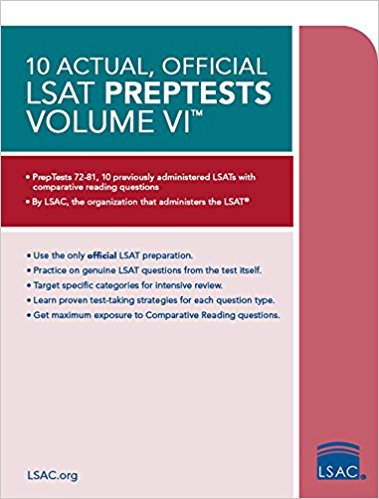
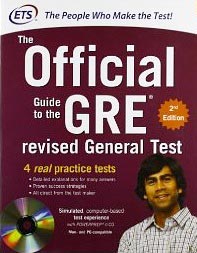
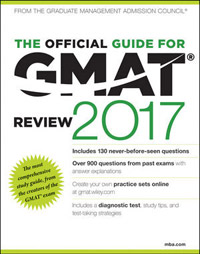
McElroy Tutoring recommends the following ISEE Prep Books:
(Please Click Here to View/Buy the rest of our ISEE Book Recommendations on Amazon.com)
Independent School Entrance Examination (ISEE)
From Wikipedia, the free encyclopedia
http://en.wikipedia.org/wiki/ISEE
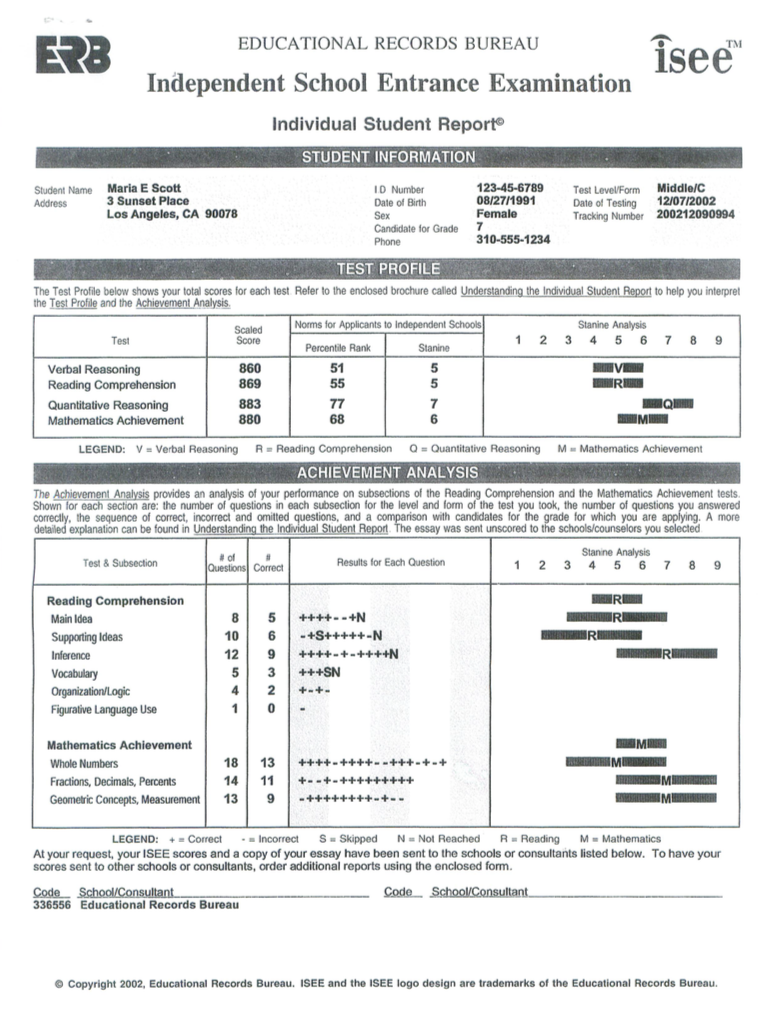
The Independent School Entrance Examination, or ISEE, is an entrance exam used by many independent schools and magnet schools. Designed and administered by the Educational Records Bureau, the ISEE has three levels: the Lower level, for entrance in grades 5-6; Middle level, for entrance in grades 7-8; Upper level, for entrance in grades 9-12. All levels consist of five sections: Verbal Reasoning, Quantitative Reasoning, reading comprehension, and Mathematics Achievement, and a 30-minute essay section. The test is approximately two hours and forty minutes long in total, plus time for two breaks.
Contents[hide] |
[edit] Verbal Reasoning
This section consists of two parts: synonyms and sentence completions. There are 40 questions, with 20 minutes allowed for the Middle and Upper levels and 25 minutes for the Lower level.
[edit] Quantitative Reasoning
This section is 35 minutes long and has 35 questions for all levels. The Lower and Middle levels consist of "Comprehension," "Interpretation/Application," and "Higher Order Thinking" parts, and the Upper level consists of "Arithmetic/Algebra/Geometry," "Concepts/Understanding," "Applications/Higher Order Thinking," and "Quantitative Comparison" sections.[1]
[edit] Reading Comprehension
This section consists of about 7-9 Humanities, Science, and Social Studies passages. Candidates must read each passage and answer around 4-6 questions based on the information in the passage. The section measures students' ability to understand and comprehend each passage, as well as some vocabulary-in-context. There are 40 questions on the Middle and Upper level, and 36 questions on the Lower level—all levels are allowed 40 minutes.
[edit] Mathematics Achievement
On this section, there are 35 questions in 40 minutes in the Lower level, 45 questions in 45 minutes on the Middle level, and 45 questions in 40 minutes on the Upper level. All levels test "Knowledge and Skills," "Computation/Comprehension," and "Application," and the Upper level additionally tests Arithmetic/Algebra/Geometry.
[edit] Essay
On all three levels, candidates must plan and write an essay to provide a sample of his or her writing to schools to which the candidate is applying. A topic is distributed, and students have 30 minutes to write an essay using a black or blue pen. The essay is not scored, but it is photocopied and sent to schools to which the student is applying.
[edit] References
Secondary School Admission Test
From Wikipedia, the free encyclopedia
http://en.wikipedia.org/wiki/Secondary_School_Admission_Test
The Secondary School Admission Test, or SSAT, is an admissions test administered to students in grades 5-11 to help determine placement into independent or private junior high and high schools. Despite its similarities, the SSAT is not related to the SAT Reasoning test and is not administered by the College Board.
There are two levels of the test: the Lower level for students in grades 5-7 and the Upper level, designed for students in grades 8-11. The SSAT consists of two parts: a brief essay and a multiple choice test that includes Mathematics, Reading Comprehension and Verbal sections. In all, there are five sections.
The test, written in English, is primarily administered in the United States and Canada at various test centers, which usually are independent schools. However, there are also test centers worldwide.
Contents[hide] |
[edit] Essay
In the essay part of the test, students will be asked to support or argue against a topic statement by using examples from personal experience, history, literature and current events.The essay section is 25 minutes long and students are given one side of a paper to write this essay.(The essay is not to be scored.However,it's still very important.)[citation needed]
[edit] Mathematics Section
There are two 25 minute math sections with 25 questions each that require basic computations including some basic algebra.
[edit] Verbal Section
The verbal section is 30 minutes long and consists of 30 synonym and 30 analogy questions.
[edit] Reading Comprehension Section
The 40 minute reading comprehension section has 40 questions based around seven given reading passages. These questions not only require test takers to read quickly but also comprehend what they are reading.
[edit] Scoring
All questions on the SSAT are equal in value and scores are based on the number of questions correctly answered subtracted by one-quarter point for each question you answer incorrectly. No points are awarded or deducted for questions left unanswered. The scaled score for the Upper Level is 500- 800 and the Lower Level is 440- 710.
The SSAT score report provides scaled scores for each section as well as percentile ranks for each category, comparing a students score to others who have taken the test in the past three years. Also in the score report are estimated national percentile ranks for 5-9 grade test takers and projected 12th grade SAT scores for test takers in grades 7-10.
Upon receiving their scores, students can send the results to the independent schools they wish to apply to. Each school then evaluates the scores according to its own standards and requirements.
[edit] External links